


















2026 च्या पहिल्या चंद्र ग्रहणाची तारीख, वेळ, सुतक नियम, भारतात दृश्यता, ज्योतिषीय अर्थ आणि उपाय सोप्या भाषेत जाणून घ्या.
**First Lunar Eclipse (Chandra Grahan) 2026 –
Date, Time, Sutak Rules & Will It Be Visible in India?**
The first lunar eclipse (Chandra Grahan) of 2026 is one of the most anticipated celestial events of the year — both astronomically and astrologically. A lunar eclipse happens when the Earth comes between the Sun and the Moon, casting a shadow on the Moon and temporarily dimming its glow. In many cultures — especially in India — lunar eclipses have traditional beliefs, dos & don’ts, spiritual significance and behavioral guidelines associated with them.
In this article, we will explore:
✔ The exact date and timing of the lunar eclipse
✔ Sutak / Panchak / eclipse duration rules
✔ Whether it will be visible in India
✔ Astrological effects on individuals and zodiac signs
✔ Mythology and cultural context
✔ Practical tips, precautions, and remedies
✔ FAQs and actionable guidance
Let’s dive in!
1) What Is a Lunar Eclipse? (सरल भाषेत समजून घ्या)
A lunar eclipse (Chandra Grahan) occurs when:
🌞 Sunlight is blocked by the Earth
🌍 Earth’s shadow falls on the Moon
🌙 Moon gradually loses brightness or appears reddish
Unlike a solar eclipse, a lunar eclipse is visible at night and can be seen by people in a large part of the Earth where the moon is above the horizon.
2) First Lunar Eclipse of 2026 – Exact Date & Time
The first lunar eclipse of 2026 is set to occur on:
📅 Date: Friday, 21 February 2026
🕐 Time (approx): Early morning hours
⏱️ Duration: Totality + Partial phases combined will span several hours
(Exact local times vary by location but we will provide India timing windows below.)
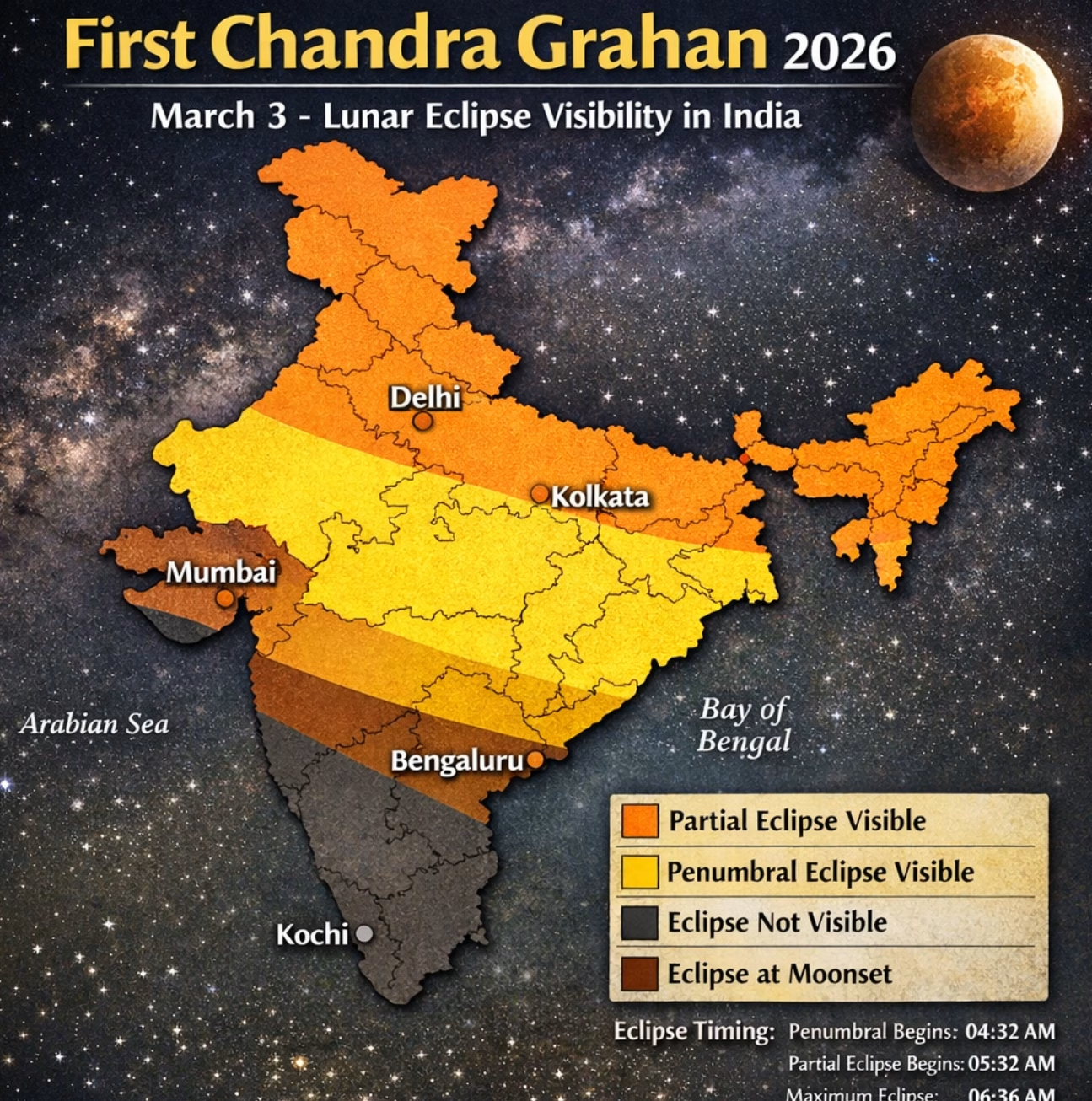
3) Will This Eclipse Be Visible in India? (भारतात दिसेल का?)
Yes — for India, the lunar eclipse on 21 February 2026 will be visible partially or fully, depending on your region and the local time the moon rises.
In most parts of India, you will be able to see:
🌘 Partial eclipse phase as the Moon rises
🌗 Maximum eclipse when Earth’s shadow covers the Moon’s surface
✨ Subtle reddish glow if atmospheric conditions are favorable
So unlike solar eclipses which need protective glasses, lunar eclipses are safe to observe with the naked eye.
4) Understanding Sutak (सुतक) and Eclipse Rules
In traditional astrology and cultural practice in India, certain observances are followed before, during, and after a lunar eclipse. These are not merely ritualistic — they reflect discipline, mindfulness, and mental preparation.
Sutak (सुतक) refers to the Eclipse Time Window — a time of heightened energy, during which some activities are avoided.
Typical Eclipse Sutak Timings
✔ Sutak begins a few hours before the eclipse
✔ The eclipse happens in a specific time window
✔ Sutak ends a few hours after the eclipse
During this time, commonly observed precautions include:
❌ Avoid eating meals or heavy food
❌ Avoid cutting hair or nails
❌ Avoid signing important documents
❌ Avoid starting new initiatives
✔ Meditation, prayer and internal reflection encouraged
These traditional practices are intended to help maintain calm, stability, and good focus while the celestial energies are in transition.
5) The Eclipse from an Astronomical Perspective
Astronomically, a lunar eclipse has three main phases:
1) Penumbral Phase
The Earth’s outer shadow causes a subtle dimming.
2) Partial Phase
Earth begins covering part of the Moon’s surface.
3) Total Phase
The Moon is fully in the Earth’s dark shadow (umbra), often turning a reddish or copper color — popularly known as a “Blood Moon”.
This progression can last multiple hours.
6) Astrological Interpretation of Lunar Eclipse (Chandra Grahan)
Astrology views lunar eclipses as moments of emotional reset, deep reflection, and karmic tides — especially in the areas of:
🌑 emotions
🌕 subconscious patterns
🧠 long-term drives
💡 intuitive insights
🔄 endings and beginnings
a) Emotional & Psychological Effects
During a lunar eclipse period, many people feel:
✔ deeper emotions
✔ nostalgia
✔ sudden insights
✔ desire for closeness
✔ inner restlessness
This is because the Moon in astrology represents the mind, emotions and subconscious instincts.
b) Life Changes and Transitions
Often, a lunar eclipse can coincide with:
✔ endings of chapters (relationships, jobs, patterns)
✔ revelations of truth
✔ clear realizations
✔ emotional closure
It doesn’t mean drama or upheaval — but it encourages internal recalibration.
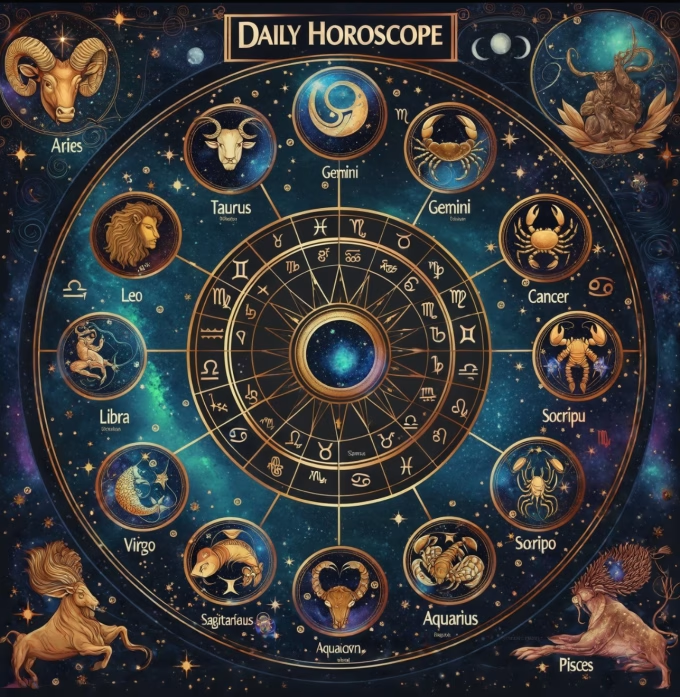
7) Lunar Eclipse and Zodiac Signs
Each zodiac sign experiences eclipse energy differently:
Aries / Mesh
💭 Emotional intensity rises; focus on long-term emotional goals
💪 New understandings about relationships or personal identity
Taurus / Vrishabh
💰 Money matters and personal resources come into clearer view
🧘 Stabilizing emotional habits may be helpful
Gemini / Mithun
🗣️ Communication and connections feel deeper — revisit unresolved talks
📓 Inner curiosity leads to meaningful outputs
Cancer / Kark
🌊 Core emotions come to surface
💖 Family and home dynamics may feel stronger
Leo / Singh
⭐ Ambitions include deeper purpose; leadership with empathy
✍️ Creative streaks can intensify
Virgo / Kanya
📊 Logical clarity on situations that seemed confusing earlier
🍃 Health & routines benefit from inner focus
Libra / Tula
🤝 Relationships or collaborations may ask for authenticity
🎭 Harmony needs inner balance
Scorpio / Vrushchik
🔮 Transformation and psychic sensitivity peak
🔥 Letting go of old habits feels powerful
Sagittarius / Dhanu
🧭 Vision and meaning become clearer
📚 Learning and travel energy gains momentum
Capricorn / Makar
🌐 Professional paths and structures may shift
🎯 Focus on long-term goals becomes sharper
Aquarius / Kumbh
💞 Group involvement and social patterns gain insight
🔍 Your want to contribute gets clearer
Pisces / Meen
💫 Inner knowing increases, intuition strengthens
🎨 Spiritual or creative pursuits feel deeper
8) Cultural & Mythological Perspectives
In Indian tradition, lunar eclipses have been interpreted through mythological stories involving cosmic forces, symbolic interpretations, and lessons tied to human behavior — including themes of:
✔ ego dissolution
✔ karmic balancing
✔ letting go
✔ renewal
✔ emotional acceptance
These stories emphasize internal growth and self-awareness over fear.
9) Foods, Health and Daily Routine Around Eclipse
Traditional guidance around eclipses often includes:
✔ Eating a light meal before sutak begins
✔ Focusing on simple, sattvic foods (easily digestible) before eclipse
✔ Avoiding meals during sutak and the eclipse period
✔ Resume eating after sutak ends
✔ Avoiding physical exertion or heavy labor
✔ Practicing meditation, breathing exercises and gentle movement
These are not arbitrary restrictions — they reflect a period of internal reflection and nervous system rest.
10) Practical Do’s & Don’ts (Daily Guidance)
Do:
✔ Rest deeply
✔ Meditate or pray
✔ Journal your thoughts
✔ Reflect on patterns you want to change
✔ Spend quiet time with family
Don’t:
❌ Start major ventures
❌ Sign important contracts
❌ Eat impulsively
❌ Focus on negative news
❌ Engage in heated arguments
These guidelines help you ride the eclipse energy with grace and awareness.
11) Remedies for Emotional Stability
Even if you don’t follow all traditional rules, these gentle remedies can enhance your peace and balance:
✨ Practice slow breathing for 5–10 minutes
✨ Sit in calm light or open sky
✨ Journaling emotional insights
✨ Visualization of inner clarity
✨ Gratitude or intention statements
12) Summary of Key Timings (India Local)
🌓 Sutak Begins: Few hours before visible eclipse
🌕 Eclipse Main Phase: When the moon is above horizon
🌒 Maximum Eclipse: Peak shadow period
🌑 Sutak Ends: After visible eclipse completes
Exact local times vary by location, but India will see the eclipse in its visible phase during late night to early morning of 21 February 2026.
13) Common Misconceptions
❌ Eclipse means doom — Not true; it’s more about inner reflection than fear.
❌ Must avoid everything — Instead, be aware and intentional.
❌ Only certain people are affected — Eclipse influences everyone emotionally but differently.
What matters most is how you respond internally.
14) FAQs – Lunar Eclipse 2026 (Practical Answers)
Q1 – Will lunar eclipse affect health?
✔ Not directly — but emotional changes, sleep patterns, and rest cycles can vary. Gentle movement and rest help.
Q2 – Can I watch it from India?
✔ Yes, you can see it with the naked eye — especially during moonrise and peak phases.
Q3 – Should we eat during eclipse?
✔ From traditional practice, it’s best to avoid eating during sutak and eclipse phase.
Q4 – Does lunar eclipse impact everyone equally?
✔ No — personal zodiac and life situation shape influence, but general lunar emotional sensitivity can arise.
Q5 – How to benefit the most from today’s eclipse?
✔ Use it as a pause — reflect, plan, rest, chart intentions.




Leave a comment