

























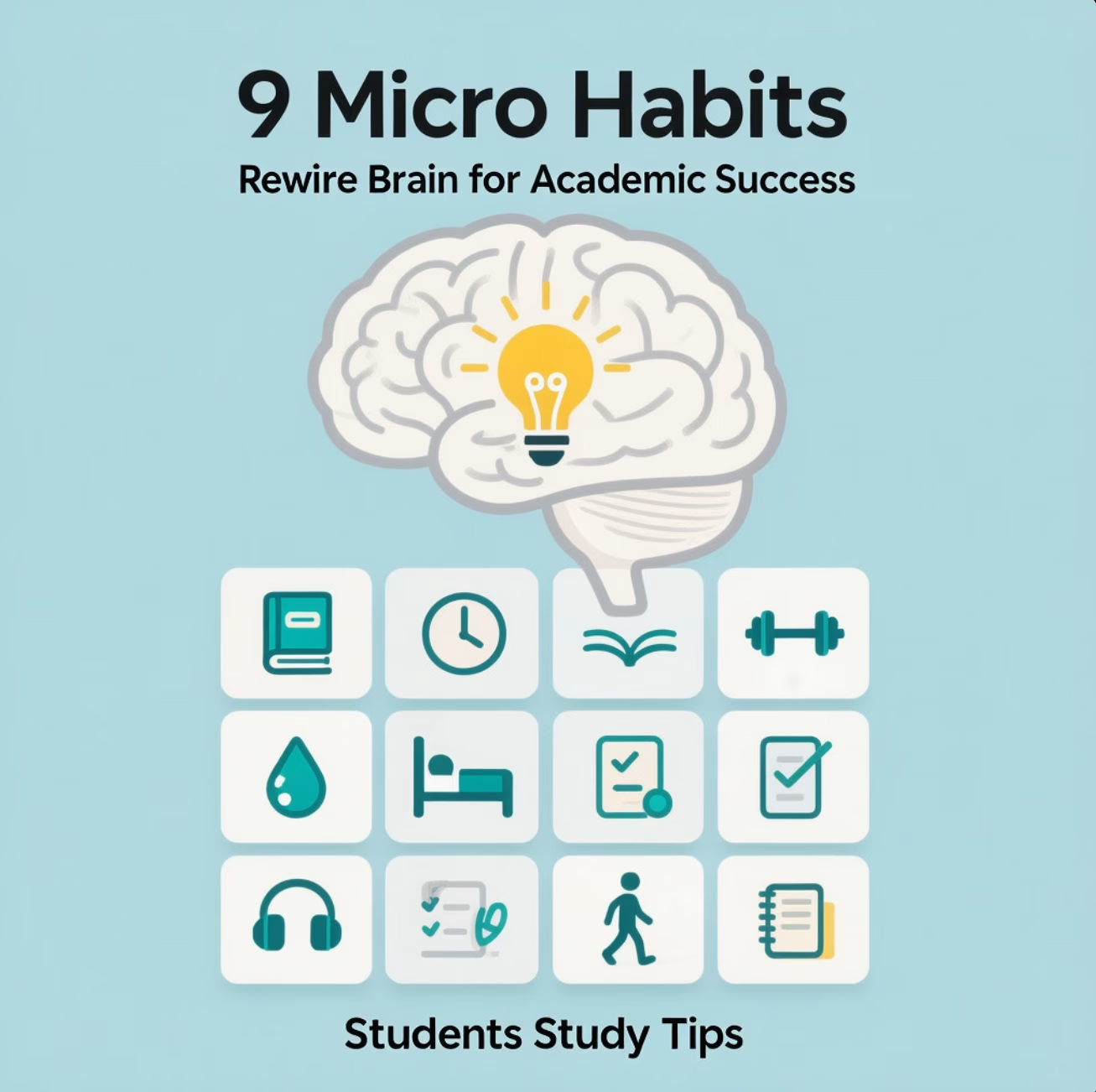
अकॅडेमिक यशासाठी मेंदू रीवायर करणाऱ्या 9 सूक्ष्म सवयी — अभ्यास, स्मरणशक्ती, वेळेचे नियोजन आणि मनोवैज्ञानिक तयारीसाठी संपूर्ण मार्गदर्शन.
Introduction: Academic Success and the Brain
अकॅडेमिक success केवळ intelligence किंवा memorization वर अवलंबून नसते — आपल्याची मेंदूची wiring, learned behavior, habits, neural pathways आणि daily practices हे सर्व मिळून निर्णय घेतात की आपण किती impact learning करतो.
आजचे विद्यार्थी — school, college, competitive exams — सर्वच contexts मध्ये effective learning, focus, memory, recall, motivation आणि deep understanding हवं असतं.
पण हे एकाच दिवशी होत नाही — आपल्या मेंदूच्या structure आणि function ला positive direction मध्ये बदललं पाहिजे.
या बदलाला आपण म्हणू शकतो — Brain Rewiring for Academic Success.
🔹 Brain Rewiring म्हणजे काय?
→ आपल्या neural connections मेंदूमध्ये प्रत्येक अनुभवाने बदलतात. जेव्हा आपण योग्य सवयी, repetition आणि strategy वापरतो, तेव्हा brain new pathways तयार करतो — ज्यामुळे study performance, understanding and retention सुधारते.
या लेखात आपण 9 अत्यंत powerful पण small micro habits जाणून घेणार आहोत — ज्यांनी रोजची study strategy बदलते आणि long-term academic success साठी brain conditioning करतात.
Habit 1: Morning Mindset Routine – Clear Intentions Before Study
What It Is
रोज सकाळी उठल्यावर study or learning goals स्पष्टपणे तयार करणं, मन शांत ठेवणं आणि दिशा ठरवणं — हे micro habit आपल्याला start with focus बनवतो.
Why It Matters
मेंदू एक guided focus ला आकर्षित होतो — जेव्हा आपण सकाळी intentions (उद्दिष्टे) set करतो, तेव्हा subconscious mind त्याच pathway ला prioritize करतं.
How to Practice
✔ सायकल, शांत दिशा
✔ 3–5 मिनिटे deep breaths
✔ आपल्या top 3 study goals लिहा
✔ त्यांना voice loud नाही, silent focus मध्ये rehearse करा
Psychological Impact
✔ clarity, less wandering mind
✔ directed attention framework
✔ deep study readiness
Habit 2: Two-Minute Startup Ritual – Quick Engagement Technique
What It Is
जेव्हा study सुरू करता, अगदी दोन मिनिटे simple engagement ritual करा — pen, notebook, device off, clean table.
Why It Matters
Your brain automatically connect study as a ritual instead of random start. Ritual builds positive anticipation.
How to Practice
✔ Desk ready
✔ Water bottle in place
✔ Book open page
✔ 2 minutes slow breath
Neurological Benefit
✔ switch from resting mode to learning mode
✔ fewer distractions
✔ faster ramp-up of neural readiness
Habit 3: Active Recall Before Passive Reading
What It Is
Active Recall म्हणजे study material वाचण्याआधी seat वर बसून what you already know recall करणे.
Why It Matters
Passive reading alone is ineffective for retention — in brain terms, retrieval practice strengthens neural pathways.
How to Practice
✔ Notebook बंद
✔ Light eyes closed
✔ Recall topic points
✔ Then start reading
Memory Improvement
✔ reduces forgetting curve
✔ strengthens synaptic connection
✔ builds confidence
Habit 4: Pomodoro with Reflection – 25 + 5 Cycle
What It Is
Pomodoro technique:
25 minutes deep study + 5 minutes short reflection.
Why It Matters
Brain has attention cycles — if you push beyond, focus drops. Short breaks help memory consolidation.
How to Practice
✔ 25 min timer
✔ 5 min break — stand, drink water
✔ After every 4 cycles — long break
Brain Response
✔ stronger attention span
✔ reduced burnout
✔ improved encoding
Habit 5: Daily Note Synthesis – Every Session Summary
What It Is
Study session नंतर 1–3 sentences summary करा — आशयाचा सारांश आपल्या शब्दात.
Why It Matters
Summarizing forces your brain to translate input into understanding — that builds strong neural representations.
How to Practice
✔ After session
✔ 3 sentence summary
✔ Write bold bullets
✔ 1 line personal insight
Cognitive Benefit
✔ deeper understanding
✔ improved recall
✔ link old and new knowledge
Habit 6: Curiosity Time – Ask Questions Every Day
What It Is
Regularly ask questions (why, how, when, what if) related to study material.
Why It Matters
Curiosity engages reward pathways and deepens connection with material — brain releases intrinsic motivation signals.
How to Practice
✔ Write 3 questions per topic
✔ Answer them
✔ If no answer — search or ask teacher
Brain Wiring Impact
✔ critical thinking boost
✔ deeper neural networking
✔ creativity + comprehension
Habit 7: Sleep Review Ritual – Brain Consolidation Priority
What It Is
Every night before sleep, review what you learned today for 5–7 minutes.
Why It Matters
Sleep helps memory consolidation — review before sleep enhances brain’s memory encoding.
How to Practice
✔ close lights
✔ recall session points
✔ speak silently
✔ reflect on learning quality
Cognitive Science Insight
✔ improved long-term retention
✔ reduced forgetting
✔ well-organized memory
Habit 8: Movement Breaks – Body Supports Brain
What It Is
Short exercise or light movement after a long study session.
Why It Matters
Blood flow and oxygen increase boosts brain efficiency — dopamine and endorphins release improved mood and attention.
How to Practice
✔ 5–10 min walk
✔ stretching or yoga
✔ breathing sequences
Brain Chemistry Effect
✔ lowered stress response
✔ improved neurotransmission
✔ sharper focus
Habit 9: Reflection & Adjustment – Weekly Study Recap
What It Is
Weekly check-in — what worked, what didn’t, update plan next week.
Why It Matters
Reflection rewires brain’s executive system — planning, monitoring, controlling.
How to Practice
✔ Sunday review
✔ 3 success points
✔ 2 improvement points
✔ update next week goal list
Deep Learning Benefit
✔ self-regulated learning style
✔ better planning-execution loop
✔ growth mindset strengthening
How These Habits Rewire Your Brain — Under the Hood
1) Repetition Strengthens Neural Networks
Brain learns through repetition — each micro habit practiced consistently makes a pathway stronger.
Meaning: connection between neurons becomes faster, smoother, and more efficient.
2) Attention vs Memory
Focus + encoding leads to strong memory — habits like active recall and Pomodoro support attention peaks.
3) Intrinsic Motivation
Curiosity and reflection build internal drive — brain’s reward pathways respond better than external pressure.
4) Sleep’s Role
Sleep isn’t rest — it’s memory cementing phase. Review before sleep boosts recall.
5) Body-Mind Link
Movement and break habits align circulatory and brain chemistry — dopamine and serotonin improve positivity and focus.
Day-by-Day Plan to Build These Habits (30-Day Schedule)
Week 1 – Foundation
✔ Morning Mindset
✔ Two-Minute Startup
✔ Active Recall
Week 2 – Attention Boost
✔ Pomodoro
✔ Daily Note Summary
✔ Sleep Review
Week 3 – Deeper Engagement
✔ Curiosity Time
✔ Movement Breaks
Week 4 – Reflection & Improvement
✔ Weekly Review
✔ Combine all micro habits
✔ Personalized tweaks
What Success Looks Like After 8 Weeks
✔ Confidence rise
✔ Better grades and comprehension
✔ Steady study flow
✔ Reduced stress
✔ Strong long-term memory
Common Mistakes to Avoid
❌ Only reading passively
❌ Ignoring breaks
❌ Not tracking goals
❌ Studying without plan
❌ Forgetting reflection
Study Tools You Can Use Alongside These Habits
✔ Timers for Pomodoro
✔ Notebooks for summaries
✔ Journals for weekly reflection
✔ Light music for focus
✔ Flashcards for recall
Parents & Teachers: How to Support Students
🔹 Encourage consistent routine
🔹 Praise small wins
🔹 Provide structured environment
🔹 Ask curiosity questions
🔹 Respect rest and sleep
FAQs (5 Frequently Asked Questions)
1) These are micro habits — how long before results show?
→ Within 2–4 weeks you will notice better focus and memory improvement; 6–8 weeks shows deeper academic success.
2) What if I miss a habit sometimes?
→ It’s okay — consistency over perfection matters.
3) Should these replace study time?
→ No — they enhance efficiency, not replace study.
4) Are these suitable for all ages?
→ Yes — from teens to adults, these habits help any learning phase.
5) Can these help stress and anxiety too?
→ Absolutely — focus, rest, reflection all improve mental well-being.
- academic performance tips
- brain optimization for students
- brain rewiring for study
- effective learning strategies
- memory improvement practices
- micro habits for academic success
- motivation and discipline in study
- neuroscience and learning habits
- student success habits
- study habits that improve learning
- study routine micro habits








Leave a comment